In July, 2022 we held a drill in our Downdraft series at the invitation of the City of Cottage Grove – Washington County, MN. It was an HSEEP graded functional exercise, focused on disaster recovery from flooding. We had Hams at City Hall (EOC) and the Volunteer Reception Center, as well as the Public Works center where sandbags were being made. The Red Cross, Salvation Army and Team Rubicon were there. The area of the simulated flooding, River Acres Road, is on the Mississippi river, and is subject to regular high water conditions.
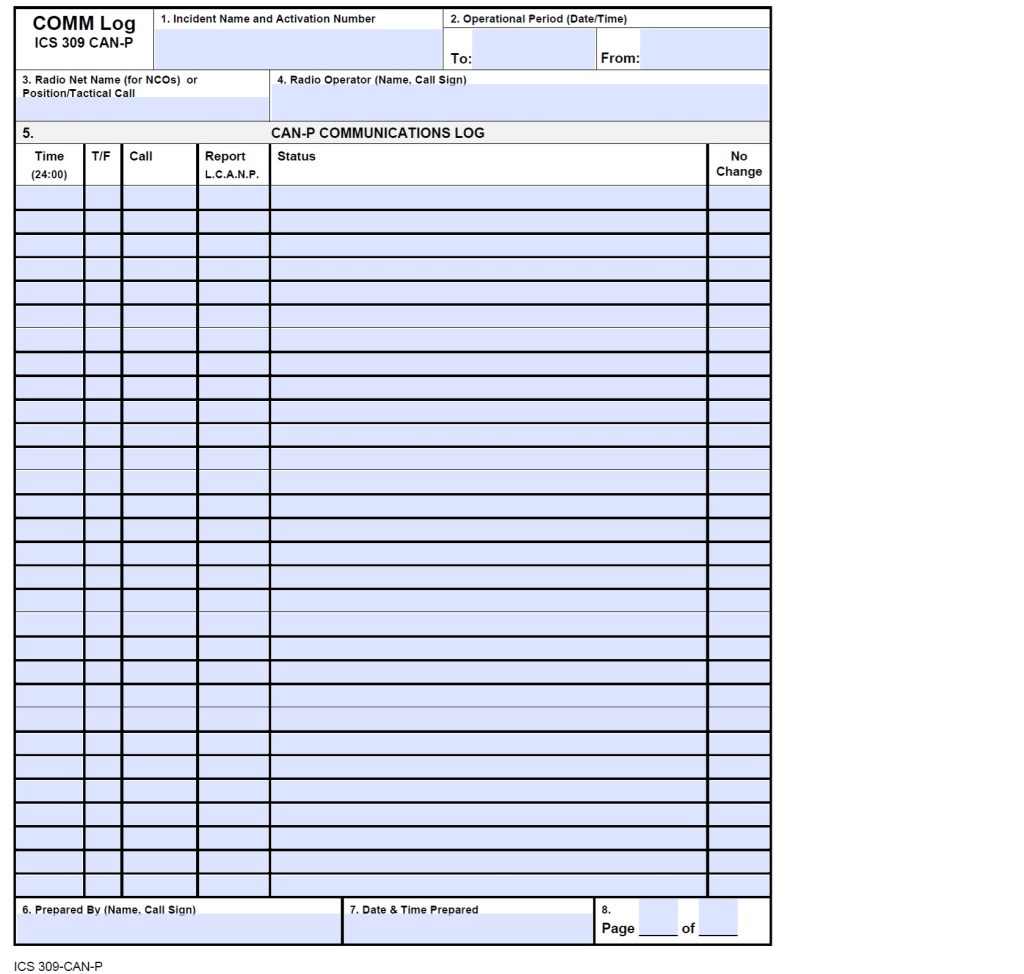
Hams set up a directed radio net and sent in situation reports every half hour from the various work sites. These follow a form and format we learned from the US Fire Service – where Incident Command (now NIMS) came from, the ICS-309 CAN-P.
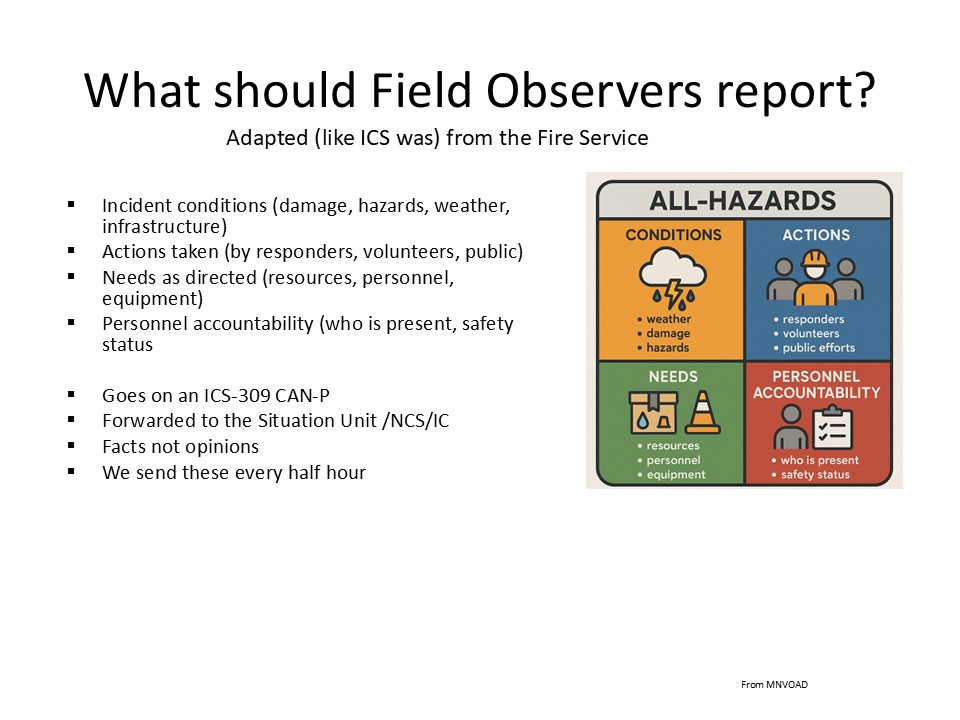
-Incident conditions (damage, hazards, weather, infrastructure)
–Actions taken (by responders, volunteers, public)
–Needs as directed by local officials (resources, personnel, equipment)
–Personnel accountability (who is present, safety status)
These reports dropped on the desk of the Incident Commander, City Emergency Manager, Dr Gwen Martin. She had no prior experience with hams. In the hot wash after, she thought about the reports, and concluded that we really belonged in the Situation Unit under Planning. So the idea was born. It has been tested a number of times including at the MN State COMMEX in 8/25. Dr. Martin leads the State All Hazard Incident Management Team, so is an expert on large incidents.
Reports are forwarded to the Situation Unit *(if activated), Net Control and or the Incident Commander. The key to these are facts not opinions. This is not radical or new. This is an all-hazards version of what Hams do with severe weather spotting. We send them every half hour or as needed.
On the coordination calls with FEMA after the Waterville, MN flooding in 2014, the various emergency managers and agencies were asking the questions off the CAN-P form. Other types of formats can of course be used. This is not an original idea, rather an adaptation of an existing process (Fire Service FOBS) to a Ham Radio/ARES use cased based on agency input.
 Ham Radio Tower Trailers